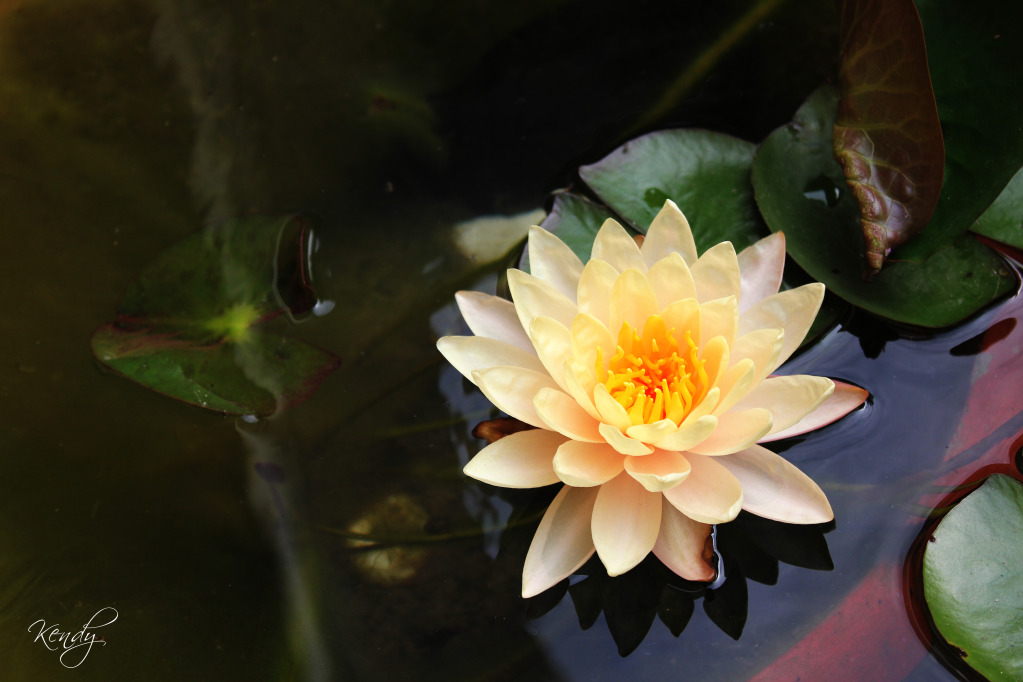
Feeding the Mind-Body Loop

I started my morning today with an amazing 90-minute yoga session.  Yoga has been a part of my lifestyle for the past 5 years, serving as a sanctuary for exercising my mind and body.  I am always reminded of each one of the wellness kriyas as I arrive on my mat, striving to become strong and flexible in the body while being fluid in the mind.  My instructor, Danny, began class this morning with an intention – “Miracles”, he said.  “Be conscious of the miracles in your life, starting with your mind and body”.  It took me back to our topic of gratitude, which we discussed last week.  But this went a step further.  “We always have a choice – to either create peace or create war by what we put in our minds and how we treat our bodies.  There IS no neutral”, said Danny. 

This got me thinking about the power of intention.  In order to intend to think a certain way, we must exercise our brains in a way that perhaps doesn’t feel normal to us.  Research now shows that our brains actually have more elasticity and plasticity than we once thought.  Elasticity, or the ability to stretch and return back to shape, allows us to have flexibility, controlled mobility, and balance.  Plasticity, or the ability to mold or form, is the way in which the brain can re-shape itself by the input and experiences it receives.  This means we can actually create new neural pathways and strengthen existing ones by our mental and physical exercise.  I see this fascinating phenomenon daily in my profession, as I help to rehabilitate those that have suffered strokes, or injured areas of the brain that have been deprived of oxygen.    

There is definitely an integrated system in our minds and bodies.  Our brain communicates with our bodies through chemicals and hormones that it releases, thereby allowing for a particular physical response.  Think about how a stressful day can make your head hurt or raise your blood pressure.  Our bodies also signal our brains to process valuable information.  When you stub your toe, there are pain signals that communicate to your brain.  When you are at the gym working out, happy endorphins can swim upstream to create a lighter mood.  The mind and body have this perfect feedback mechanism.  But what we feed ourselves, both mentally and physically is truly what will impact our overall well-being. 

This week, think about what you are doing to “feed” your mind and bodies.  Start with your mind.  How about beginning to feed only positive mental images to your life experiences for a day?  This is what my yoga instructor, Danny, did.  Maybe you meditate for 5 minutes and feel how your body responds.  Perhaps, you think about using your non-dominant hand for daily tasks like brushing your teeth or using the remote control.  You could also try a mentally challenging activity like a crossword puzzle or sudoku.  It all may seem uncomfortable and awkward at first.  But know that by engaging your mind and body, you are re-creating a newer YOU.  And, to me, that’s a miracle in itself.  ***Stay tuned for more on exercising the mind and body.

Deepali’s piece of wellness:  Try at least one new way to use your mind or body this week.  I guarantee one will benefit the other.

Blessings in Disguise

A reminder that sometimes we can’t see the big picture……but it exists.  Be grateful for your trials and tribulations along the way…….

Be Thankful
Be thankful that you don’t already have everything you desire,
If you did, what would there be to look forward to?

Be thankful when you don’t know something
For it gives you the opportunity to learn.

Be thankful for the difficult times.
During those times you grow.

Be thankful for your limitations
Because they give you opportunities for improvement.

Be thankful for each new challenge
Because it will build your strength and character.

Be thankful for your mistakes
They will teach you valuable lessons.

Be thankful when you’re tired and weary
Because it means you’ve made a difference.

It is easy to be thankful for the good things.
A life of rich fulfillment comes to those who are
also thankful for the setbacks.

GRATITUDE can turn a negative into a positive.
Find a way to be thankful for your troubles
and they can become your blessings.
~ Author Unknown ~

Cultivating Gratitude

We talked Monday about the reasons it’s important to adopt an attitude of gratitude.  The question now is, “how do we do it”?    Although we are all born with certain tendencies toward viewing the glass as half-full or half-empty, we can strengthen our brain circuits toward optimism if we practice.  I would suggest trying a few of these suggestions over the next several weeks and see how you feel.  I’m pretty sure it’ll be better than when you started.  Some of these ideas have been recommended by Hans Rippel, a writer for Optimal Functioning. 

1.  Keep a Gratitude Journal.  Keep a log of the things/people for which you are grateful.  It could be as easy as writing down 5 things each day.   Having a record to reflect back upon is a way to lift your spirits, especially at times when you’re feeling down on yourself. 

2.  Make the Right Kind of Comparisons.  There are two ways you can do this.  You can compare yourself and your current life situation to those that are less fortunate, thereby reminding you of your abundance.  You can also feel gratitude toward those that inspire and motivate you, thereby turning around the feeling of envy.

3.  Come to your Senses.  Remember the gifts of sight, sound, smell, taste, and touch.  These are part of being grateful for your health.

4.  Use Visual Reminders.  Place positive words, quotes, cards on your desk, bathroom mirrors, fridge, car – wherever you go on a day to day basis. 

5.  Go Through the Motions.  Do things that make you feel grateful and express your gratitude to others.  While going through the motions, remember to be grateful to those that may have hurt you, for they have also had something to teach you.  

These ideas will help you get started.  I’m sure we have all utilized our own techniques that have helped flex the gratitude muscle.  Feel free to share what has worked for you!

Attitude of Gratitude

Each night before I go to bed, I silence my mind and give thanks for the events of my day and also for the good that is yet to come.  For a long time, it was harder for me to give thanks for the moments that had been particular challenging on a given day or for the situations in which I had struggled.  Going down the “why me” path was always so much easier and required little to no attention.  Just as the pathway to a knee-jerk reflex does not involve looping through the brain, so is the incessant, negative self-talk we give ourselves.  The only way to break the cycle is to be present (as we discussed last week) and be grateful

Feeling gratitude is one of the kriyas that can truly send your wellness quotient flying, not to mention change your life in the process.  There has been a lot of research showing that those who practice an attitude of gratitude have a more positive outlook on life, improved social connections, and better sleep patterns.  Dr. Robert Emmons from the University of California, Davis (my alma mater!) is currently developing a tool to measure the level of gratitude people show in their lives. 

So, why should we adopt an attitude of gratitude?  I came up with 5 of my own reasons:

1.  What we focus on, multiplies.  When we focus on what is going right in our lives, we find that our lives actually begin to feel quite abundant.  We find so many things to be thankful for, just by taking a few minutes to re-focus. 

2.  We feel happier.  Who wouldn’t be happy when they focus on what they have, not what they lack. 

3.  It reminds us of what’s important in life.  It’s harder to complain about your work, when you are grateful for having a job.  It’s harder to feel sorry for yourself, when you are grateful for having a family that loves you.  It’s harder to be upset about home renovations, when you are grateful to have a home not affected by a tsunami. 

4.  It allows us to appreciate those around us.  It’s so important to acknowledge the people in your lives.   Thank that stranger for letting you have the parking spot.  Compliment your best friend if you like her outfit.  Tell someone why you’re grateful to have them in your life.  It will make their day….and yours!

5.  We are able to exude a positive vibe.  When we display gratitude, it makes others want to jump on the bandwagon and think about what they are thankful for also.  It is infectious, like laughter.  People are attracted to it and are more apt to pay it forward. 

To sum up, let me just say this:  Be grateful for what you have, be grateful for what you don’t have, be grateful for what is coming your way, but most importantly, be ever so grateful for where you are in your life today.  If you can rise up to that space, you will literally shift the vibration of your life.  ***Check back Wednesday for techniques to help you exercise your gratitude muscle!

Deepali’s piece of wellness:  This week, start and end each day with at least 5 things that fuel you with gratitude!

Each New Moment…..

“Every morning is a fresh beginning. Every day is the world made new. Today is a new day. Today is my world made new. I have lived all my life up to this moment, to come to this day. This moment–this day–is as good as any moment in all eternity. I shall make of this day–each moment of this day–a heaven on earth. This is my day of opportunity”.
— Dan Custer

What if we could really live every day like that?  The truth is, we can.  It is a choice we make each day, each moment.  No matter what has happened in our past, no matter what fears we hold for the future, we get to choose whether to accept the gift that is offered to us every minute of the day – and not a moment sooner or a moment later!

Have a wonderful weekend!

photo by Wendy Ku

A Balance between Past and Future

It is impossible not to reflect upon our past or envision our future.  In fact, I don’t even think it is entirely unhealthy to do so. 

Our past has taught us valuable lessons and shaped who we have become.  We can look back at mistakes we made and have the knowledge to take a different route.  We can recall vivid memories of happy times when we learned to ride a bike or when we fell in love. 

There are also times when we have to think ahead and decide how to save money for college or book a family vacation. Many of us make plans for the future by setting an intention, writing down goals, and envisioning an outcome. 

Both the past and future do deserve some recognition, however problems arise when we live in either space.  We choose to live in the past if we hold onto regrets, anger, disappointments, or even constant nostalgia of happy times gone.  These things have already happened.  We choose to live in the future if we worry, build anxiety, or create a variety of scenarios and outcomes in our head.  The future has not yet arrived. 

Eckhart Tolle states that the remedy to get over your past is forgiveness.  “Forgiveness happens naturally as soon as you realize that the past cannot prevail against the power of Presence”.  And, as far as the future goes, “You create a good future by creating a good present”.  It always comes back to the Now.  Do you think you are feeding all your energy to your past, forsaking the present?  Are you obsessing about the future and hoping that your life will catch up to it?  Maybe you don’t like your present circumstances and are re-living times that were better or creating fantasies about escaping into the future.  How do you deal with a heartbreak, a job loss, an illness when it truly feels like your current reality? 

You stay in the Now.  In the most literal sense, you take each individual moment and become aware of it.  For in that space, the present space, there is stillness in the midst of chaos.  You can breathe here.  And if you can string together many of these peaceful moments, you can free yourself from the bars of your past and the angst of the future.  That is your balance point.

In the Here and Now

photo by GoodShot

How many of you have a list of things in your head right now that need to get done?  Mid-morning meeting. Check.  Quick lunch at desk. Check.  4pm pilates class. Check.  Pick up kids. Check.  Grocery shop. Check.  Our days (and minds) are full of countless check marks.  With all the items on our to-do list, how many of us really pay attention to the tasks we’re actually performing?  Can you even remember being at that work meeting?  Were you tasting the food you ate for lunch?  Were you listening to your kids when they told you about their day at school?  In today’s world, it is becoming increasingly difficult to be mindful and present to what we are doing.  Are you feeling overwhelmed or overworked? You may appreciate reading a great article by Leo Babauta, creater of the website Zen Habits, to offer you some tips. 

I think being mindful of the things on your to-do list, whatever they may be, will allow you to be more productive.  No task is too mundane to discount your full presence into it.  There are three meanings to the word present: here, now, and gift.  I don’t think it’s a coincidence.  Being in the here and now allows us to appreciate the gift of the moment.  

This week, let’s try to be mindful of our days.  Use ALL your senses.  Take in the light of the sun shining through your window, feel the soft fur of your puppy against your skin, listen to the sound of a train in the distance, smell the aroma of flowers on your walk outside, taste the savory flavors in the meal you’ve cooked for dinner.  Note to self:  remember that using our senses and being present brings color into our day-to-day lives.  Check.   ***Stay tuned for more discussion on how to be present.

Deepali’s piece of wellness:  Take one full minute each hour of your day to reconnect with your breath, your self, and your surroundings.

Comparing Apples to Apples

I think it’s inevitable that we all, to some degree, compare ouselves to those around us.  Does my outfit look good enough, is my house big enough, is the amount of money I make enough?  Enough, already!  The “enough” seems to be centered around where we stand in comparison to those around us.  It could be our friends, family, coworkers, etc.  We have this need to impress and try to “keep up with the Joneses”.   We seek approval from those outside of ourselves, despite what our truth might be.  We begin to judge ourselves by the standards to which we hold others. 

I remember looking at certain friends over the years and thinking “wow, they have it good…..their lives have lined up perfectly for them….if only I could have it that good”.  These same people over the years would be the ones to go through their own  life struggles, falling off the pedestal I had placed them on.  A person’s life may seem perfect on the outside, but perhaps only on the surface.  I found out recently that a good friend of mine is going through life-changing transitions, many of which I had never known. 

The truth of the matter is, we all go through ebbs and flows in life.  It really is pointless to compare your own path to that of another, thinking you should be riding along at the same speed, going to the same places.  We all have our own unique things to learn, problems to face, fears to tackle, layers to peel down.  If our happiness is based upon being in line with someone else’s path, we won’t ever find fulfillment.  It’s about looking inside yourself and really radiating what is true to you.  Who is your authentic self?  What is your purpose and what do you have to contribute to the world?  What really brings you joy?  My hope is that the only comparison we make is within ourselves…..to compare how much we have grown by some of our challenging experiences and knowing that we have always been enough.

The Deeper Seed of Happiness

When it comes to spirituality, there are few teachers that compare to Eckhart Tolle.  I have read the book below and I highly recommend it to all.  There are many spiritual life lessons packed inside.  This is an excerpt from the January ’09 issue of O magazine. 

Oneness with All Life by Eckhart Tolle
  1. Don’t seek happiness. If you seek it, you won’t find it, because seeking is the antithesis of happiness. Happiness is ever elusive, but freedom from unhappiness is attainable now, by facing what is rather than making up stories about it.
  2. The primary cause of unhappiness is never the situation but your thoughts about it. Be aware of the thoughts you are thinking. Separate them from the situation, which is always neutral, which always is as it is. There is the situation or the fact, and here are my thoughts about it. Instead of making up stories, stay with the facts. For example, “I am ruined” is a story. It limits you and prevents you from taking effective action. “I have 50 cents left in my bank account” is a fact. Facing facts is always empowering.
  3. See if you can catch the voice in your head, perhaps in the very moment it complains about something, and recognize it for what it is: the voice of the ego, no more than a thought. Whenever you notice that voice, you will also realize that you are not the voice, but the one who is aware of it. In fact, you are the awareness that is aware of the voice. In the background, there is the awareness. In the foreground, there is the voice, the thinker. In this way you are becoming free of the ego, free of the unobserved mind.
  4. Wherever you look, there is plenty of circumstantial evidence for the reality of time—a rotting apple, your face in the bathroom mirror compared with your face in a photo taken 30 years ago—yet you never find any direct evidence, you never experience time itself. You only ever experience the present moment.
  5. Why do anxiety, stress, or negativity arise? Because you turned away from the present moment. And why did you do that? You thought something else was more important. One small error, one misperception, creates a world of suffering.
  6. People believe themselves to be dependent on what happens for their happiness. They don’t realize that what happens is the most unstable thing in the universe. It changes constantly. They look upon the present moment as either marred by something that has happened and shouldn’t have or as deficient because of something that has not happened but should have. And so they miss the deeper perfection that is inherent in life itself, a perfection that lies beyond what is happening or not happening. Accept the present moment and find the perfection that is untouched by time.
  7. The more shared past there is in a relationship, the more present you need to be; otherwise, you will be forced to relive the past again and again.
  8. Equating the physical body with “I,” the body that is destined to grow old, wither, and die, always leads to suffering. To refrain from identifying with the body doesn’t mean that you no longer care for it. If it is strong, beautiful, or vigorous, you can appreciate those attributes—while they last. You can also improve the body’s condition through nutrition and exercise. If you don’t equate the body with who you are, when beauty fades, vigor diminishes, or the body becomes incapacitated, this will not affect your sense of worth or identity in any way. In fact, as the body begins to weaken, the light of consciousness can shine more easily.
  9. You do not become good by trying to be good, but by finding the goodness that is already within you and allowing that goodness to emerge.
  10. If peace is really what you want, then you will choose peace.

Exerpted from Oneness with All Life by Eckhart Tolle. Published by arrangement with Dutton, a member of Penguin Group (USA), Inc. Copywright © 2008 by Eckhart Tolle

Belief in Spirit

Every year millions of us blow out our birthday candles and make a wish.  We pray for a loved one in the hospital.  We have those visceral signs that guide us in making big life decisions.  The common denominator in those instances is that, for most of us, we believe there is a power outside of us that is accessible through hope, faith, or prayer.  Be it God, the universe, or a higher Spirit, we feel a sense of peace when we hand over many of our trials and tribulations over to something greater than ourselves.

Our spiritual wellness encompasses the deeper part of who we are – it encapsulates our core values and beliefs, our life purpose and the meaning it holds for us.  That awareness we have brings us closer to the divine “higher” power we believe will carry us through.  In essence, it lives within us.  Studies have already shown the benefits that spirituality plays in our lives.  Those that practice accessing the deeper parts of themselves and believe that the Universe/God is on their side, have been noted to have reduced stress and lower blood pressure.  I think it is definitely a contributor to our wellness quotient.

I know that lately I have attempted to access my spiritual energy and reach for guidance from the Universe.  I am having to make some big life-changing decisions and have been in a frenzy about it.  There are inevitable fears, doubts, frustration, and resistance.  I’ve been forced to ask myself some difficult questions.  Chatting with some good friends over ice cream last night, I was reminded of  my ability to choose my thoughts.  Negative thoughts often brew negative outcomes.  It’s that simple, self-fulfilling prophecy, or the Law of Attraction.  Why not be excited at the opportunity of something new and live in the light of the life ahead?  How would that change the perception of my reality?  I know that by silencing my mind, through yoga/meditation/prayer, I will be able to find the answers.  I just need to trust and take heed to the signs that will present themselves around me.  And I trust that you all will, too!  ****More on Spirit Wednesday!

Deepali’s piece of wellness:  Believe in a power greater than your physical self…..there is more to you than meets the eye!